Kerala's Mural Art: Temple Walls to Modern Canvas
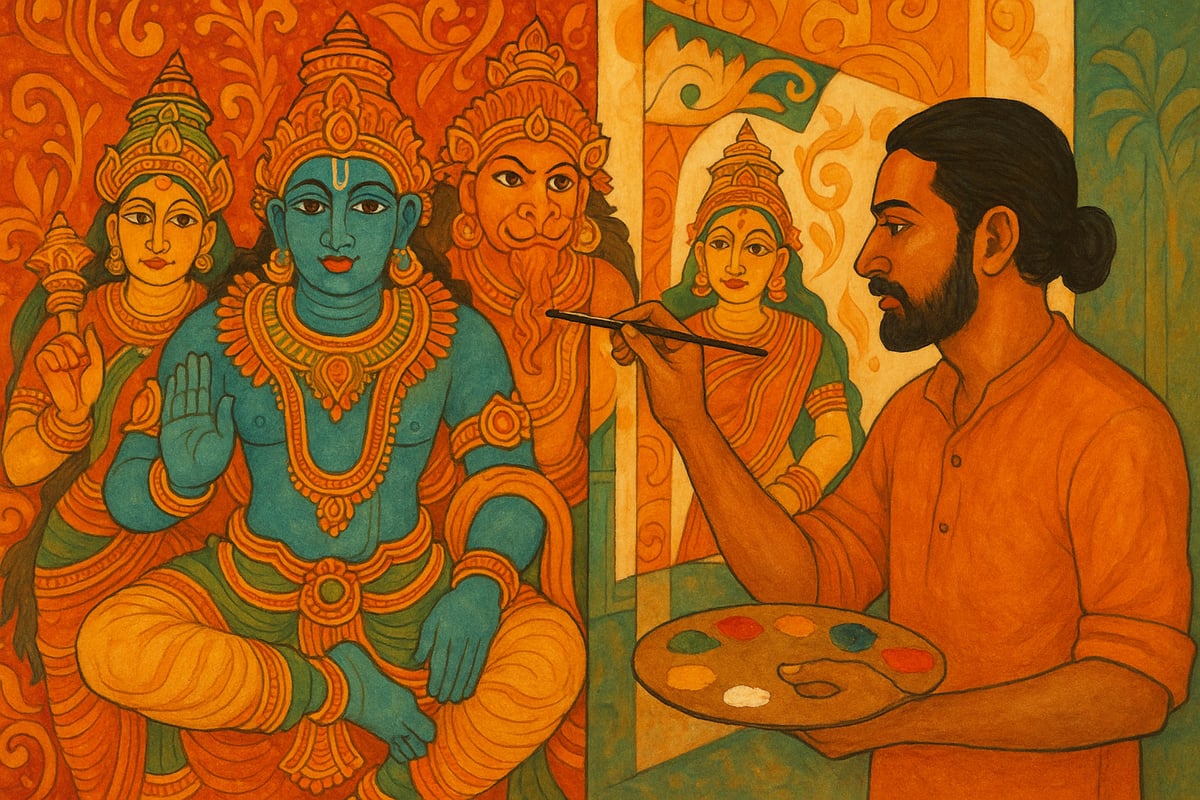
Kerala's mural art tradition represents one of India's most distinctive and spiritually powerful artistic expressions, with roots stretching back over a millennium. These monumental paintings, originally created to adorn temple walls, showcase a unique synthesis of indigenous Dravidian artistic traditions with influences from across the Indian subcontinent. Today, this ancient art form continues to evolve, finding new expression on contemporary canvases while maintaining its profound spiritual and cultural significance.
Historical Origins and Development
Ancient Foundations (8th-12th Centuries)
The earliest examples of Kerala mural painting can be traced to the 8th century, with fragments found in ancient temples and caves. These early works established the fundamental characteristics that would define the tradition: bold drawing, vibrant natural colors, and deeply spiritual themes rooted in Hindu mythology and local folklore.
The art form reached its first major flowering during the reign of the Chera dynasty, when temple construction and religious patronage created favorable conditions for artistic development. The integration of Kerala's unique cultural identity with broader Indian artistic traditions created a distinctive visual language that was both locally rooted and cosmopolitically informed.
Classical Period (14th-16th Centuries)
The classical period of Kerala mural art coincided with the rise of powerful regional kingdoms and increased temple construction. During this era, the technical and aesthetic foundations of the tradition were firmly established, creating masterworks that continue to inspire artists today.
Key Developments:
- Standardization of iconographic conventions
- Refinement of color preparation techniques
- Development of distinctive Kerala artistic vocabulary
- Integration with performance traditions (Kathakali, Theyyam)
Regional Variations
Different regions of Kerala developed their own subtle variations within the broader tradition:
Northern Kerala (Malabar):
- Stronger folk influences
- Integration with Theyyam traditions
- Bold, graphic approach
Central Kerala:
- Classical refinement
- Sophisticated color harmonies
- Technical excellence
Southern Kerala (Travancore):
- Royal patronage influences
- Integration with Tamil traditions
- Elaborate decorative elements
Distinctive Characteristics of Kerala Murals
Stylistic Elements
Bold Outlines: Kerala murals are characterized by strong, confident line work that defines forms clearly and dramatically. These lines, typically drawn in black or dark brown, create powerful silhouettes that remain visible even from great distances.
Flat Color Areas: Unlike European traditions that emphasize modeling and three-dimensional illusion, Kerala murals use flat, unmodulated color areas that create a distinctly decorative and symbolic rather than naturalistic effect.
Frontality and Profile: Figures are typically shown in strict frontal or profile positions, following ancient Indian artistic conventions that emphasize symbolic and spiritual significance over naturalistic representation.
Hierarchical Scale: Important figures (deities, kings) are shown larger than lesser characters, reflecting spiritual and social hierarchies rather than natural proportions.
Decorative Richness: Intricate patterns, jewelry, and costume details fill every available space, creating visually dense compositions that reward close examination.
Color Palette and Symbolism
Kerala murals employ a distinctive color palette derived from natural materials, each carrying specific symbolic meanings:
Colors and Their Significance:
- Red (from ochre): Divine power, energy, auspiciousness
- Yellow (from turmeric/orpiment): Knowledge, prosperity, sacred energy
- Green (from leaves and minerals): Nature, growth, harmony
- Blue (from indigo): Infinity, cosmic consciousness
- White (from lime): Purity, peace, transcendence
- Black (from soot): Time, mystery, the absolute
Iconographic Conventions
Facial Types: Kerala murals developed standardized facial types for different categories of characters:
- Divine figures: Idealized features with large, lotus-shaped eyes
- Demons: Exaggerated features with bulging eyes and fierce expressions
- Human characters: Naturalistic but refined features
- Animals: Stylized but recognizable forms
Hand Gestures (Mudras): Specific hand positions convey precise meanings, derived from classical Indian dance and religious traditions.
Costume and Ornaments: Elaborate depictions of traditional Kerala dress and jewelry provide valuable historical information while enhancing visual richness.
Major Temple Complexes and Masterworks
Mattancherry Palace (Dutch Palace), Kochi
Period: 16th century
Significance: Royal palace murals showing secular and religious themes
The Mattancherry Palace contains some of Kerala's most celebrated murals, depicting scenes from the Ramayana and other Hindu epics. These paintings, commissioned by local rulers, demonstrate the high level of artistic achievement possible under royal patronage.
Notable Features:
- Complete Ramayana narrative cycle
- Integration of architectural elements
- Sophisticated compositional arrangements
- Historical documentation of 16th-century Kerala culture
Vadakkunnathan Temple, Thrissur
Period: Various periods from 12th century onward
Significance: Ancient temple complex with multiple mural phases
This ancient Shiva temple contains murals spanning several centuries, providing insight into the evolution of Kerala painting styles. The paintings demonstrate how the tradition maintained continuity while adapting to changing aesthetic and religious preferences.
Ettumanoor Mahadevar Temple
Period: 16th century
Significance: Exceptional Krishna-themed murals
The Ettumanoor temple murals are renowned for their depictions of Krishna's life and adventures. These paintings showcase the Kerala tradition's ability to handle complex narrative themes with clarity and visual appeal.
Pundarikapuram Rajarajeswara Temple
Period: 16th century
Significance: Complete Shiva Purana cycle
This temple complex contains one of the most complete mythological cycles in Kerala mural art, depicting the stories of Shiva in extraordinary detail and artistic sophistication.
Krishnapuram Palace, Kayamkulam
Period: 18th century
Significance: Late period masterwork
The famous "Gajendra Moksha" mural in this palace represents one of the largest and most accomplished single compositions in Kerala art, demonstrating the tradition's continued vitality in the 18th century.
Technical Processes and Materials
Wall Preparation
The creation of Kerala murals begins with elaborate wall preparation:
Surface Preparation:
1. Base Layer: Mixture of lime, sand, and organic materials
2. Smoothing Layer: Fine lime plaster mixed with coconut water
3. Final Layer: Pure lime mixed with tender coconut water and organic additives
4. Curing Process: Extended drying and polishing to create perfect surface
Pigment Preparation
Traditional Kerala murals use pigments derived from natural sources:
Mineral Pigments:
- Red ochre: Iron oxide from local laterite soil
- Yellow ochre: Natural earth pigments
- White: Crushed lime and chalk
- Black: Soot from burned coconut shells
Organic Pigments:
- Green: Extract from leaves and copper compounds
- Blue: Indigo and other plant-based blues
- Yellow: Turmeric and other plant extracts
Binding Agents:
- Coconut milk and water
- Rice paste
- Natural gums and resins
Painting Process
The actual painting follows a systematic approach:
- Preliminary Sketch: Basic composition outlined in charcoal
- Line Drawing: Detailed drawing in black or brown
- Color Application: Flat color areas applied systematically
- Detail Work: Patterns, ornaments, and fine details added
- Final Touches: Highlights and finishing details
Tools and Implements
Traditional tools were simple but effective:
- Brushes: Made from coconut fiber, bamboo, and animal hair
- Mixing Surfaces: Stone palettes and coconut shells
- Drawing Tools: Bamboo sticks and reed pens
Thematic Content and Iconography
Religious and Mythological Themes
Epic Narratives:
- Ramayana: Complete story cycles from Rama's birth to coronation
- Mahabharata: Selected episodes, particularly Krishna's role
- Bhagavata Purana: Krishna's childhood and youth
- Shiva Purana: Stories of Shiva and Parvati
Devotional Themes:
- Dashavatar: The ten incarnations of Vishnu
- Panchaloha: The five metal images
- Ashtadikpalas: The eight directional guardians
- Local Deities: Regional gods and goddesses
Secular Themes
While primarily religious, Kerala murals also include secular subjects:
- Royal Portraits: Rulers and court scenes
- Historical Events: Important local historical moments
- Cultural Activities: Festivals, dances, and ceremonies
- Natural Elements: Flora, fauna, and landscapes
Regional Performance Connections
Kathakali Influence
The relationship between Kerala murals and Kathakali dance-drama is profound and reciprocal:
Shared Elements:
- Character types and makeup conventions
- Gesture vocabulary (mudras)
- Costume and ornament styles
- Facial expressions and emotional codes
Cross-Pollination:
- Mural artists studying Kathakali for authentic characterization
- Kathakali artists drawing inspiration from painted depictions
- Common training traditions and aesthetic principles
Theyyam Connections
The folk tradition of Theyyam shares important elements with mural art:
- Bold, graphic approach to representation
- Emphasis on spiritual transformation
- Integration of local and pan-Indian elements
- Ritual and ceremonial contexts
Masters and Lineages
Traditional Artist Families
Kerala mural art was traditionally practiced by specific communities and families:
Namboothiri Brahmins: Often commissioned and sometimes created religious murals
Professional Artist Communities: Specialized castes who maintained the technical traditions
Regional Masters: Individual artists known for particular innovations or achievements
Notable Historical Artists
While many traditional masters remain anonymous, some artists achieved recognition:
- Mammiyur Krishnan Namboothiri: 19th-century master known for temple murals
- Regional workshops: Groups of artists associated with particular temples or courts
Modern Revival and Contemporary Practice
20th Century Renaissance
The modern revival of Kerala mural art began in the early 20th century:
Key Figures in Revival:
- Nandalal Bose: Included Kerala traditions in his pan-Indian approach
- K.C.S. Paniker: Contemporary artist who drew inspiration from murals
- Academic Interest: Scholars and art historians documenting the tradition
Contemporary Adaptation
Modern Kerala mural artists have found new ways to engage with the tradition:
New Surfaces and Formats:
- Canvas paintings in traditional style
- Smaller domestic and commercial works
- Integration with modern architecture
- Digital and multimedia applications
Thematic Evolution:
- Contemporary social themes in traditional style
- Environmental and political subjects
- Abstract explorations using traditional vocabulary
- Cross-cultural artistic dialogues
Training and Education
Formal Education:
- Art colleges teaching traditional techniques
- Government support for traditional arts
- Cultural centers offering training programs
- University research and documentation projects
Traditional Apprenticeship:
- Master-student relationships continuing
- Family traditions being maintained
- Workshop-based learning opportunities
- Integration with temple restoration projects
Conservation and Preservation
Challenges to Preservation
Historic Kerala murals face numerous threats:
- Environmental Factors: Humidity, salt air, monsoon damage
- Human Factors: Neglect, inappropriate restoration, modernization
- Technical Issues: Original material deterioration, structural problems
- Social Changes: Declining traditional patronage, changing religious practices
Conservation Efforts
Government Initiatives:
- State conservation programs
- Protection of heritage sites
- Training programs for conservators
- Documentation and research projects
Private and NGO Efforts:
- Temple committees supporting restoration
- Cultural organizations promoting awareness
- International collaboration on conservation
- Artist communities maintaining traditions
Documentation Projects
Academic Research:
- Comprehensive surveys of existing murals
- Technical analysis of materials and methods
- Historical and cultural contextualization
- Digital preservation initiatives
Contemporary Relevance and Global Recognition
International Recognition
Kerala murals have gained increasing international attention:
- Museum exhibitions worldwide
- Academic conferences and symposiums
- Art market interest in contemporary works
- Cultural exchange programs
Tourism and Cultural Heritage
Mural art has become an important part of Kerala's cultural tourism:
- Heritage circuits including major mural sites
- Cultural performances explaining traditions
- Handicraft industries inspired by mural designs
- Educational programs for visitors
Influence on Contemporary Art
Modern artists continue to find inspiration in Kerala murals:
- Contemporary interpretations of traditional themes
- Technical innovations building on traditional methods
- Cross-cultural artistic collaborations
- Integration with modern artistic movements
Learning and Practicing Kerala Mural Art
Traditional Training Methods
Historical training followed established patterns:
- Long apprenticeships with master artists
- Gradual progression through skill levels
- Integration of spiritual and technical training
- Community-based learning environments
Contemporary Learning Opportunities
Modern students can access the tradition through:
- Art schools and cultural institutions
- Workshops with traditional masters
- Online resources and documentation
- Cultural centers and museums
Required Skills and Knowledge
Students of Kerala mural art must develop:
- Technical drawing and painting skills
- Knowledge of iconography and symbolism
- Understanding of traditional materials and methods
- Appreciation of cultural and spiritual contexts
Future Directions and Challenges
Maintaining Authenticity
The challenge of preserving authenticity while allowing evolution:
- Balancing tradition with innovation
- Training new generations of artists
- Maintaining spiritual and cultural relevance
- Adapting to contemporary contexts
Technological Integration
Modern technology offers new possibilities:
- Digital documentation and preservation
- Computer-aided design and planning
- Modern materials with traditional aesthetics
- Global communication and collaboration
Cultural Continuity
Ensuring the tradition's continued vitality requires:
- Strong institutional support
- Community engagement and participation
- Integration with contemporary life
- International recognition and exchange
Conclusion
Kerala's mural art tradition represents one of India's most distinctive and spiritually powerful artistic expressions. From its origins in ancient temple walls to its contemporary manifestations on modern canvases, this art form demonstrates the remarkable ability of traditional cultures to maintain their essential character while adapting to changing circumstances.
The technical mastery, spiritual depth, and visual power of Kerala murals continue to inspire artists, scholars, and viewers worldwide. These works provide not only aesthetic pleasure but also valuable insights into the rich cultural and spiritual traditions of Kerala and the broader Indian civilization.
As we move forward into the 21st century, Kerala mural art faces both challenges and opportunities. The continued vitality of this tradition depends on the commitment of artists, scholars, institutions, and communities to preserve its essential character while allowing for creative evolution and contemporary relevance.
For students, practitioners, and admirers of Indian art, Kerala murals offer a profound and rewarding engagement with one of humanity's great artistic traditions. They remind us of art's capacity to embody and transmit the deepest spiritual and cultural values while providing immediate visual and emotional impact that transcends cultural and temporal boundaries.